Executive Summary
Africa’s steel industry is poised for significant transformation, presenting substantial opportunities for global investors and strategic partners. The continent’s vast natural resources, rapid urbanization, and infrastructure development needs create fertile ground for steel production growth. This analysis examines Africa’s current steel landscape, growth potential, competitive advantages, and implementation challenges, providing insights for stakeholders considering African steel investments.
1. Market Overview and Growth Potential
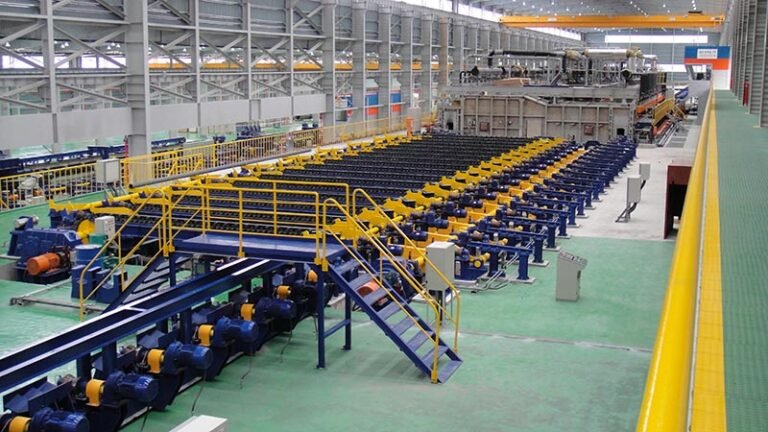
Africa’s steel industry, though historically underdeveloped, is experiencing remarkable growth driven by infrastructure demands and economic development. Current production centers mainly span six key countries—Egypt, South Africa, Algeria, Libya, Morocco, and Tunisia—which collectively produced approximately 22.3 million tons of steel in 2024 . Egypt leads as Africa’s largest steel producer and consumer, with 2024 production reaching 10.7 million tons, ranking it 19th globally .
Market projections indicate substantial growth potential. The African steel market is expected to grow at a compound annual growth rate (CAGR) of 3.10% from 2024 to 2032, potentially reaching 51.86 million tons by 2032 . This growth is primarily fueled by massive infrastructure demands, with the African Development Bank estimating annual infrastructure investment needs at approximately $170 billion . Additionally, Africa’s urbanization rate of 43% (projected to exceed 50% by 2050) will drive construction steel demand as millions migrate to cities .
Table: Africa’s Steel Production Hubs and Specializations
| Country | Production Capacity | Key Players | Specializations |
|---|---|---|---|
| Egypt | 10.7 million tons (2024) | Ezz Steel, Suez Steel | Construction steel, industrial products |
| South Africa | Among continent’s top producers | ArcelorMittal, Kumba Iron Ore | Diverse steel products |
| Algeria | 4.7 million tons (2024) | Tosyalı, Qatar Steel | Direct reduced iron (DRI) |
| Nigeria | Target: 10 million tons by 2030 | KAM Steel, Hongxing Zhongyuan | Construction steel, bars, rods |
Regional disparities create varied opportunities across the continent. North Africa, with more established industries, focuses on higher-value production, while sub-Saharan Africa presents greenfield opportunities. Nigeria has set an ambitious target of reaching 10 million tons of annual steel production by 2030 , while Tanzania’s annual steel imports exceed 100,000 tons against minimal domestic production .
2. Competitive Advantages and Investment Merits
Africa offers compelling advantages for steel production, particularly in energy costs and resource availability. Angola exemplifies this potential with natural gas prices of approximately 1.5−2/MMBtu(comparedtointernationalaveragesof3-4), making it ideal for gas-based direct reduced iron (DRI) production . This price advantage enables tonnage steel production costs of 250−300,significantlylowerthanChina′s350-400 for blast furnace production .
The continent’s rich resource base provides substantial raw material security. Guinea’s Simandou project represents a world-class deposit with proven reserves of 4.4 billion tons of high-grade iron ore (65% iron content) . Mauritania, Africa’s second-largest iron producer, exported 13 million tons in 2022, targeting 39 million tons by 2030 . Several African countries maintain iron ore production costs of just 30−40/ton,roughlyhalfofChina′s80-90/ton production costs .
Energy diversification further enhances Africa’s competitiveness. Angola’s extensive hydropower resources provide electricity costs of just 0.02−0.03/kWh,significantlybelowChina′sindustrialelectricityratesof0.08-0.12/kWh . This advantage particularly benefits electric arc furnace (EAF) steel production. Africa’s renewable energy potential also positions it favorably for green steel production, with abundant solar resources capable of supporting hydrogen-based DRI processes .
Strategic location offers logistical advantages for regional and global markets. Africa’s proximity to European markets, combined with developing trade partnerships, creates export opportunities. The African Continental Free Trade Area (AfCFTA) facilitates intra-continental trade, enabling smoother cross-border steel movement .
3. Key Projects and Development Initiatives
Substantial investments are transforming Africa’s steel landscape through landmark projects. Guinea’s Simandou project, representing over $20 billion in investment, includes a 600-kilometer railway connecting the mine to a deep-water port, with initial shipments to China commencing in December 2022 . At full capacity, Simandou could export 120 million tons annually, potentially making Guinea the third-largest iron ore supplier after Australia and Brazil .
Chinese investments significantly contribute to Africa’s steel development. Tsingshan Holding Group’s 600,000-ton steel plant in Zimbabwe began operations in 2024, with plans to expand to 5 million tons capacity . Similarly, emerging铸管’s 250,000-ton ductile iron pipe project in Egypt’s Suez Industrial Park started production in December 2024 . These projects often incorporate Chinese technology and expertise, accelerating development timelines.
Various African nations are pursuing distinct development pathways. Algeria has attracted Turkish company Tosyalı and Qatar Steel, creating an integrated production system from DRI to steelmaking and rolling, with capacity exceeding 6 million tons . Nigeria hosts numerous small and medium-sized enterprises, including KAM Steel Integrated Company with 600,000 tons of annual crude steel capacity .
Table: Major Steel Investments and Expansion Projects in Africa
| Project/Company | Location | Investment/Capacity | Status/Timeline |
|---|---|---|---|
| Simandou Iron Ore Project | Guinea | $20+ billion, 120 million tons annual capacity | First shipment December 2022 |
| Tsingshan Holding Zimbabwe | Zimbabwe | 600,000 tons (planned expansion to 5M tons) | Phase 1 operational 2024 |
| Algerian Integrated Complex | Algeria | 6+ million tons capacity | Operational, expanding |
| KAM Steel Nigeria | Nigeria | 600,000 tons crude steel capacity | Operational, expanding |
Greenfield projects and plant upgrades demonstrate technology transfer and sustainable development focus. Egypt’s Suez Steel recently commissioned an 800,000-ton heavy section rolling mill, becoming the first producer of 54E rails in Egypt and the Middle East . The company plans to expand DRI capacity to 4.5 million tons annually, indicating confidence in regional demand growth .
4. Challenges and Risk Mitigation
Despite promising prospects, Africa’s steel industry faces significant implementation challenges. Infrastructure limitations pose substantial obstacles, with insufficient transportation networks increasing logistics costs. Nigeria’s steel industry struggles with unreliable electricity supply and inadequate transport infrastructure, impacting production efficiency . Some landlocked projects require extensive rail and port development before becoming viable.
Policy and regulatory uncertainties create investment risks. Changing trade policies, bureaucratic procedures, and political instability can disrupt operations. The World Bank’s Worldwide Governance Indicators score African countries an average of -0.7 on a -2.5 to +2.5 scale, reflecting governance challenges that require careful navigation . Trade protectionism is increasing, with Africa witnessing 47 trade remedy investigations targeting steel products in 2024 alone .
Technical and workforce limitations present operational hurdles. Many regions lack specialized technical skills required for modern steel production. The shortage of qualified technicians and engineers necessitates extensive training programs and expatriate involvement, increasing costs and complexity. Countries like Algeria address this through partnerships with international educational institutions and training centers .
Financing constraints hinder project development, particularly for large-scale initiatives requiring substantial capital expenditure. Limited access to affordable long-term financing slows industry expansion and technological upgrading. International partnerships and development funding help bridge this gap, as seen with projects supported by the World Bank’s International Finance Corporation .
Effective risk mitigation strategies include:
- Forming joint ventures with established local partners to navigate regulatory environments
- Securing government guarantees and long-term investment protection agreements
- Implementing phased development approaches to manage capital exposure
- Developing comprehensive community engagement and workforce localization programs
5. Strategic Recommendations for Investors
Successful African steel investment requires tailored approaches addressing regional variations and long-term commitment. Market entry strategies should prioritize countries with relatively stable regulatory environments and growth potential. The East African Community (EAC), comprising Kenya, Tanzania, Uganda, Rwanda, Burundi, and South Sudan, offers integrated market access of over 180 million people . Similarly, economic communities like ECOWAS in West Africa and SADC in Southern Africa provide regional trade frameworks facilitating cross-border operations.
Operational excellence initiatives focusing on efficiency and cost management deliver competitive advantages. Energy cost optimization through hybrid power solutions (combining grid electricity, self-generation, and renewables) reduces exposure to unreliable supply. Logistics optimization, including strategic inventory placement and transport route diversification, mitigates infrastructure challenges. Vertical integration, from raw material sourcing to distribution, enhances supply chain control and cost management.
Stakeholder engagement and sustainability practices are increasingly crucial for long-term success. Community development programs addressing education, healthcare, and local employment build social license to operate. Environmental management incorporating best available technologies and emissions control demonstrates commitment to sustainable operations. Transparency initiatives, including regular reporting and independent audits, enhance credibility with regulators and communities.
Strategic partnership approaches include:
- Technology transfer agreements with equipment suppliers
- Local content development programs meeting regulatory requirements
- Research collaborations with academic institutions addressing industry challenges
- Supply chain integration with downstream consumers ensuring market access
Conclusion
Africa’s steel industry stands at an inflection point, with massive growth potential driven by infrastructure development, urbanization, and economic expansion. The continent’s resource advantages, combined with strategic investments, position it to play an increasingly important role in global steel markets.
Successful engagement requires understanding regional variations, building local partnerships, and maintaining long-term perspectives. While challenges exist, particularly regarding infrastructure and regulation, the growth trajectory remains positive. Companies that strategically position themselves now stand to benefit from Africa’s emerging steel industry transformation.
The coming decade will likely see Africa’s steel production significantly increase its global market share, with potential to evolve from primarily serving domestic needs to becoming a notable exporter, particularly of green steel leveraging the continent’s renewable energy resources. Strategic investors have an opportunity to participate in this growth story while contributing to Africa’s economic development.