Executive Summary
In 2025, China’s steel industry demonstrates remarkable resilience amid rising global trade protectionism, with exports maintaining strong growth through strategic market diversification and product optimization. While facing unprecedented trade barriers, Chinese steel exporters have successfully pivoted to emerging markets while accelerating green transformation and high-value product development, creating new competitive advantages in the global marketplace.
1. Export Performance and Market Dynamics
China’s steel exports have shown significant growth despite global trade headwinds. From January to July 2025, China exported 67.98 million tons of steel, representing an 11.4% year-on-year increase . This growth occurred amid escalating trade tensions and protectionist measures worldwide.
The export expansion has been facilitated by China’s persistent price advantage. By August 2025, China’s hot-rolled coil export offers were priced at **475/tonFOB∗∗,significantlybelowIndia′s525/ton and Turkey’s $525/ton . This competitive pricing has helped Chinese steel maintain its market position despite increasing trade barriers.
Table: China’s Steel Export Trends (2024-2025)
| Period | Export Volume (million tons) | Year-on-Year Change | Primary Market Focus |
|---|---|---|---|
| 2024 Total | 110.72 | +22.7% | Southeast Asia, Middle East |
| 2025 Jan-Jul | 67.98 | +11.4% | Vietnam, Saudi Arabia, UAE |
| 2025 July | 9.84 | +25.6% | Diversified emerging markets |
2. Escalating Trade Protectionism and China’s Strategic Response
Global trade protectionism has intensified significantly in 2025. The United States increased steel import tariffs from 25% to 50% in June 2025 , while the European Union announced plans to reduce duty-free steel import quotas by 47% and impose a 50% additional tariff on excess imports .
These measures triggered chain reactions worldwide. By 2025, China’s steel products faced 33 trade remedy investigations in 2024 alone, far exceeding the 4 cases recorded in both 2022 and 2023 . The first three months of 2025 saw an additional 8 new cases , indicating a worsening trade environment.
China’s strategic response has focused on three key areas:
- Market Diversification: Shifting focus from traditional Western markets to emerging economies
- Product Upgrade: Increasing proportion of high-value-added steel products
- Production Globalization: Establishing manufacturing facilities overseas to circumvent trade barriers
3. Market Diversification: From Southeast Asia to Middle East and Africa
China’s steel export geography has undergone significant transformation. Southeast Asia remains the dominant market, accounting for approximately 38% of China’s total steel exports . Vietnam has replaced Korea as China’s largest export destination, with the top ten export markets including nine Belt and Road Initiative partner countries .
The Middle East and Africa have emerged as the fastest-growing destinations. Exports to the Middle East surged by 18% year-on-year in the first half of 2025 , with the UAE and Saudi Arabia importing 2.85 million tons and 2.56 million tons respectively.
Africa has demonstrated even more dramatic growth. Exports to Nigeria skyrocketed by 108% and Tanzania by 60% during the same period . This diversification has reduced China’s dependence on any single market and enhanced its export resilience.
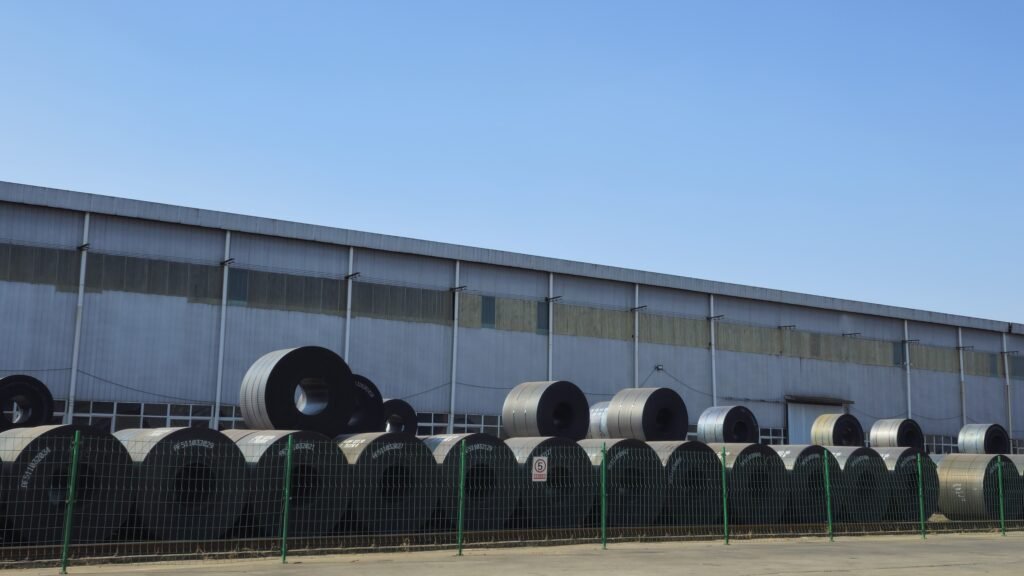
Table: Regional Distribution of China’s Steel Exports (2025 H1)
| Region | Share of Total Exports | Growth Rate | Key Characteristics |
|---|---|---|---|
| Southeast Asia | 38% | Steady | Established market, infrastructure-driven |
| Middle East | 25% | 18% increase | Energy economy, construction boom |
| Africa | 15% | 40%+ increase | Emerging market, industrialization needs |
| Latin America | 12% | 24% increase | Resource economy, development demand |
4. Product Structure Optimization and High-End Transformation
China’s steel export composition has evolved significantly toward higher-value products. The proportion of manufacturing steel has increased from 42% in 2020 to nearly 50% in 2025 , indicating a fundamental shift in demand structure.
High-end steel products have achieved remarkable breakthroughs. Production of electrical steel, a representative high-end product, reached approximately 18 million tons in 2024, a 48% increase from 2020 levels . Other advanced products like 2200 MPa ultra-high-strength bridge cable steel and “hand-torn steel” have reached international leading standards.
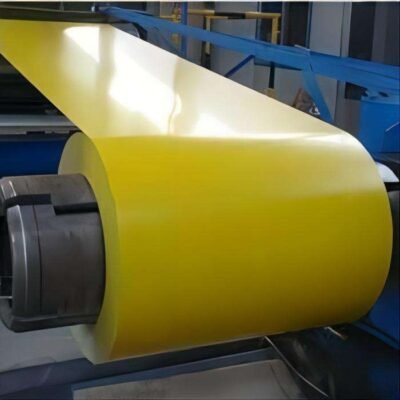
The export product mix has also optimized. In 2025, plated sheet and strip maintained their position as the largest export category, comprising 17.5% of total exports . Meanwhile, the proportion of hot-rolled products declined due to anti-dumping measures in multiple markets.
5. Green Transformation and Digital Innovation
The green transition has become crucial for maintaining international competitiveness. China’s steel industry has invested over 310 billion yuan in ultra-low emission transformation , with 163 enterprises completing upgrades covering approximately 653 million tons of crude steel capacity by October 2025.
Digital transformation is reshaping production processes. 95% of steel enterprises have incorporated digital transformation strategies into their overall development plans . Technologies like artificial intelligence and digital twins are optimizing production efficiency and quality control.
The industry is also advancing in hydrogen metallurgy and other low-carbon technologies. Projects like Baowu Group’s hydrogen-based carbon cycle furnace (HyCROF) and HBIS Group’s “hydrogen shaft furnace-near zero carbon emission electric arc furnace” new short-process project represent significant breakthroughs in green steel manufacturing .
6. “Capacity Going Global” Strategy and Localized Production
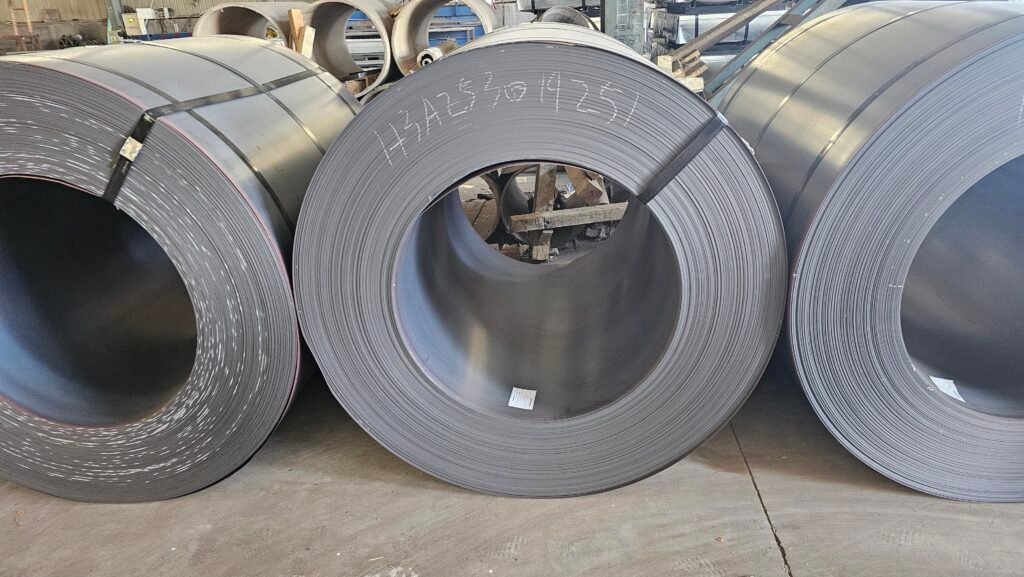
To circumvent trade barriers, Chinese steel companies are increasingly adopting the “capacity going global” strategy. Multiple enterprises have established production facilities in Southeast Asia and other regions, achieving localized production that bypasses tariff restrictions.
Notable projects include:
- Qingshan Steel: Projects in Indonesia with significant production capacity
- Beijing Jianlong: Cooperation with Malaysia’s Seri Tasek Group to build Malaysia Eastern Steel
- Panhua Group: $3.5 billion investment in the Philippines for a comprehensive steel plant
This approach aligns with host countries’ industrial policies that favor local production over imports. Middle Eastern governments particularly welcome Chinese enterprises to achieve localization through direct investment, which better suits their industrial development objectives .
7. Navigating Carbon Border Mechanisms and Future Challenges
The European Union’s Carbon Border Adjustment Mechanism (CBAM), scheduled for full implementation in 2026, presents significant challenges. Preliminary estimates suggest CBAM could increase China’s steel export costs by 4%-6% , with certificate fees reaching $200-400 million annually.
By 2034, when free carbon quotas are completely eliminated, China’s export costs to the EU could increase by approximately 49% . This pressure is accelerating the industry’s low-carbon transition.
Other countries including the UK, US, Canada, and Australia are planning their own carbon border mechanisms . The World Trade Organization also plans to incorporate carbon footprints into steel product international trade, which will systematically impact global steel trade patterns.
Conclusion and Outlook
China’s steel industry has demonstrated remarkable adaptability in navigating the complex international trade environment of 2025. Through strategic market diversification, product optimization, and sustainable transformation, the sector has maintained strong export performance despite growing protectionism.
The industry’s future competitiveness will depend on several key factors:
- Continuous innovation in high-value-added products
- Accelerated green transition to meet carbon compliance requirements
- Deepened globalization through localized production and strategic partnerships
- Digital integration across the entire value chain
As the global steel industry continues to evolve, China’s approach of balancing domestic capacity optimization with international market development, while advancing both green and digital transformations, provides a template for sustainable growth in an increasingly challenging trade landscape.
The words of a steel industry professional aptly summarize this transformation: “The future competition will be about compliance, intelligence, and low-carbon attributes rather than mere production volume.” This shift from quantity to quality represents the fundamental direction of China’s steel export strategy in the new era .