The global steel industry is undergoing its most profound transformation in decades, caught between a wave of trade protectionism and an unstoppable green revolution.
In June 2025, U.S. President Donald Trump signed an executive order raising steel and aluminum import tariffs from 25% to 50%, a move that sent shockwaves through global supply chains . Mere months later, the European Commission announced plans to cut duty-free steel import quotas by 47% while imposing a staggering 50% additional tariff on imports beyond the quota limit . Against this backdrop of rising trade barriers, the United Kingdom is urgently seeking to form a “steel club” with the U.S. and EU, aiming to protect its industries from what it describes as “supply shocks caused by global steel overcapacity” .
01 Western Nations Forge Steel Alliances, Protectionist Measures Intensify
The global steel trade landscape is being radically reshaped by a wave of protectionist policies. The United States has taken the most aggressive stance, with President Trump’s decision to double steel and aluminum tariffs to 50% effectively creating what he described as “an insurmountable high wall” against foreign metals . This decision, announced at a U.S. Steel plant in Pennsylvania, represents a significant escalation of trade measures initially implemented in March 2025 .
The United Kingdom finds itself in a particularly vulnerable position. In response to the EU’s new measures, British Trade Minister Chris Bryant revealed that the UK government is actively seeking to establish a trilateral “steel alliance” with the United States and European Union . This proposed alliance would theoretically impose unified tariffs on all imported steel products from outside the bloc while allowing tariff-free or low-tariff trade among member countries . Bryant described this initiative as a “natural response to global challenges,” emphasizing that the U.S., EU, and UK all share concerns about global steel overcapacity and the need to maintain economically secure, domestically controlled steel production capabilities for strategic needs such as national defense .
Notably, the UK secured a temporary exemption from the U.S.’s increased tariffs, with its steel and aluminum products maintaining the previous 25% duty—a special arrangement that Trump attributed to ongoing U.S.-UK trade negotiations . This exemption has caused considerable discontent within the EU, with European Commission spokesperson Olof Gill stating that the EU is “urgently consulting” on the matter and hinting at potential retaliatory tariffs .
The EU itself has moved decisively to protect its domestic market. The Commission’s October 2025 proposal introduces three key measures: reducing the annual duty-free import quota to 18.3 million tons (a 47% reduction from 2024 levels), doubling extra-quota tariffs to 50%, and strengthening traceability through melting and pouring requirements to prevent circumvention . The Commission claims these measures are fully compliant with WTO rules and are “crucial for ensuring the long-term survival and development of this strategic industry” .
Table: Comparison of Major Economies’ Steel Import Measures (2025)
| Region | Tariff Rate | Quota Volume | Key Features |
|---|---|---|---|
| United States | 50% (excluding UK) | Not applicable | Uniform tariff, UK exempted maintaining 25% rate |
| European Union | 50% (beyond quota) | 18.3 million tons | Introduces melting and pouring requirements for traceability |
| United Kingdom | Planning new safeguards | Under discussion | Seeking alliance with US and EU; domestic plan with £2.5 billion support |
The motivation behind these protectionist measures is clear. According to European Steel Association (Eurofer) data, EU steel imports reached 28 million tons in 2024, accounting for a quarter of total sales—double the import volume of 2012/13, when China emerged as a major exporter . An anonymous EU official explicitly identified Chinese steel as “by far the biggest problem” for the European steel industry .

02 China’s Capacity Replacement Policy Accelerates Industry Consolidation
While Western countries erect trade barriers, China is pursuing a different path focused on internal structural reform. China’s Ministry of Industry and Information Technology has introduced updated capacity replacement policies for the steel industry, tightening requirements in several key areas .
The revised policy encourages enterprises to efficiently utilize scrap steel resources, develop electric furnace steel production in an orderly manner, and promote hydrogen-based metallurgy in suitable regions . This signifies a further reduction of the industry’s production “ceiling,” pushing the sector toward a stage of存量capacity competition where new capacity additions have virtually ceased .
The policy has already shown preliminary results. In the first seven months of 2025, Chinese steel producers demonstrated improved profitability despite controlling production, with profit per ton of steel reaching 108 yuan, an increase of 112 yuan compared to the same period the previous year . This improvement is primarily attributed to stable prices and lower raw material costs .
Driven by the policy, China’s steel exports are expected to hit a record high in 2025, with growth projected between 4% and 9%, resulting in an export volume of 115 to 120 million tons . This export growth, however, further fuels international trade tensions.
The differentiation in market demand is also driving optimization of the product mix within China’s steel industry. While demand for construction steel products like rebar and wire rod is declining significantly, demand for high-end sheets, specialty steel, and new energy steel continues to grow . The proportion of specialty steel (including stainless steel) is expected to increase from the current 11% to 15% by 2030, approaching levels seen in Japan and Germany .
03 Green Steel Technology and Digital Transformation Advance Together
Amid trade tensions, the global steel industry is simultaneously undergoing a profound green and digital transformation. Hydrogen steelmaking, electric arc furnace steelmaking, carbon capture, and other low-carbon technologies are reshaping the landscape of this high-carbon industry.
- Hydrogen-based steelmaking: Hydrogen Direct Reduced Iron (H-DRI) technology is emerging as a promising alternative to traditional carbon-intensive steelmaking processes. Projects like Sweden’s HYBRIT initiative have demonstrated that using renewable hydrogen instead of coke can reduce carbon dioxide emissions by up to 95% .
- Electric Arc Furnaces (EAFs): Approximately 70% of steel in the United States is produced using EAF technology, which has a carbon footprint of only 0.68 tons of CO2 per ton of steel, significantly lower than the 2.33 tons from traditional blast furnaces . China is also encouraging the orderly development of EAF steelmaking .
- Digital transformation: Artificial intelligence and digital twin technologies are optimizing steel production processes. Predictive maintenance systems can alert operators to potential equipment failures before they occur, while computer vision technology enables real-time quality detection .
The industry is also establishing a mature circular economy system. In the United States, 98% of structural steel and 71% of steel reinforcement bars are recycled . Melting recycled steel requires significantly less energy than using virgin raw materials, substantially reducing the industry’s carbon footprint.
Randy Charles, CEO of Greenway Steel, noted a surge in customer interest, stating, “We are seeing a significant uptick in enquiries for low-carbon steel products, which reflects a broader industry shift towards sustainability” .
Strategic cross-border partnerships are accelerating this green transition. For instance, Fortescue and China Baowu are leading the green steel revolution through a pioneering decarbonization partnership, leveraging shared resources and expertise to overcome the challenges of producing green steel at scale .
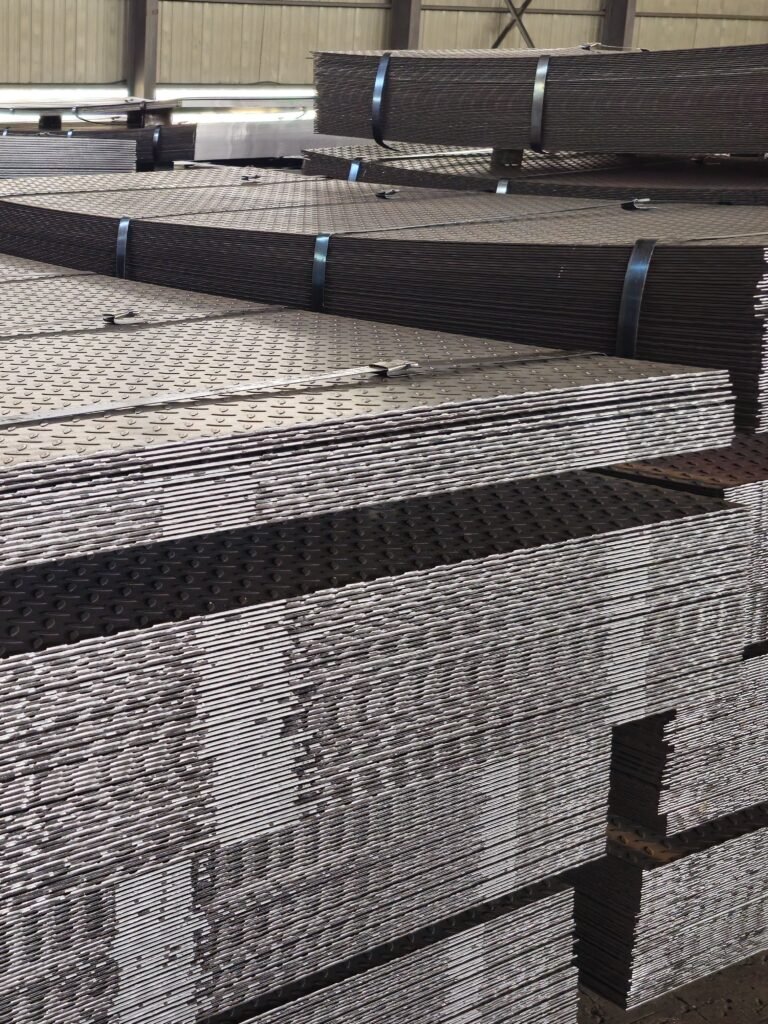
04 Differentiated Development Patterns Across Regional Markets
Major global steel markets are showing increasingly divergent trends and characteristics.
The U.S. market, protected by high tariffs, has seen domestic steel prices become the most expensive in the world . In the second quarter of 2025, Steel Dynamics increased its prices from 998to1,134 per ton, while Cleveland-Cliffs raised prices from 980to1,015 per ton . This has provided short-term benefits to domestic producers but placed significant cost pressures on downstream manufacturing industries.
The European market faces a complex dilemma. The EU’s new measures are designed to protect its upstream basic industries but have drawn strong opposition from its own industrial core—Germany . The German Automotive Industry Association (VDA) warned that these steel policies could increase component costs for Germany’s automotive industry by more than 12% . They emphasized that German premium automobile manufacturing heavily relies on specific categories of imported steel, much of which comes from China and South Korea .
The German wind power equipment industry has also expressed concerns. As a frontline sector in the EU’s green transition, wind tower and turbine structural steel often uses custom high-strength alloys, for which domestic production capacity is insufficient, creating long-term dependence on supplies from specific Asian sources . The European Wind Energy Association has stated that if supply chains are disrupted, the EU’s carbon neutrality roadmap could face systematic delays .
These voices highlight a core paradox in the EU’s industrial strategy: policies designed to protect upstream basic industries may struggle to coordinate the needs of downstream high-tech manufacturing, potentially creating a cycle of self-inflicted harm—protecting 300,000 steel jobs while jeopardizing over a million jobs in the automotive and energy supply chains .
Meanwhile, emerging markets are positioning themselves for the future. The Middle East and North Africa show particular potential for green steel production, leveraging competitive advantages from abundant renewable energy resources . With the development of necessary infrastructure and access to green raw materials, these regions could position themselves at the forefront of the green steel revolution .
05 The Road Ahead: Integration and Adaptation in a Divided Landscape
As the global steel industry looks beyond 2025, the interplay between trade protectionism and green innovation will define its trajectory. The concept of “friendshoring” or “allyshoring” supply chains based on geopolitical alignment is gaining traction, particularly with initiatives like the proposed US-EU-UK steel alliance .
However, Chinese trade experts caution against such exclusionary arrangements. Zhou Mi, a senior researcher at the Chinese Academy of International Trade and Economic Cooperation, criticized the proposed metals alliance as “clearly protectionist and discriminatory, an attempt to protect their own industries through exclusionary tactics” . He warned that “excluding China from global industrial cooperation will inevitably lead to serious imbalances in supply and demand across the sector” .
The industry’s future will likely be characterized by several key developments:
- Enhanced regionalization: Trade flows may increasingly redirect along regional lines, with countries prioritizing supply chain security and political alignment over pure economic efficiency .
- Deeper green integration: The focus will shift from mere emission reduction in steel production to comprehensive lifecycle assessment and circular economy principles across the entire value chain .
- Technological convergence: The integration of AI, IoT, and advanced data analytics with traditional metallurgical processes will accelerate, leading to unprecedented levels of efficiency and customization .
- Collaborative standardization: Despite trade tensions, there will be growing pressure to establish universal standards for measuring the carbon footprint of steel products to create a level playing field for green steel trade .
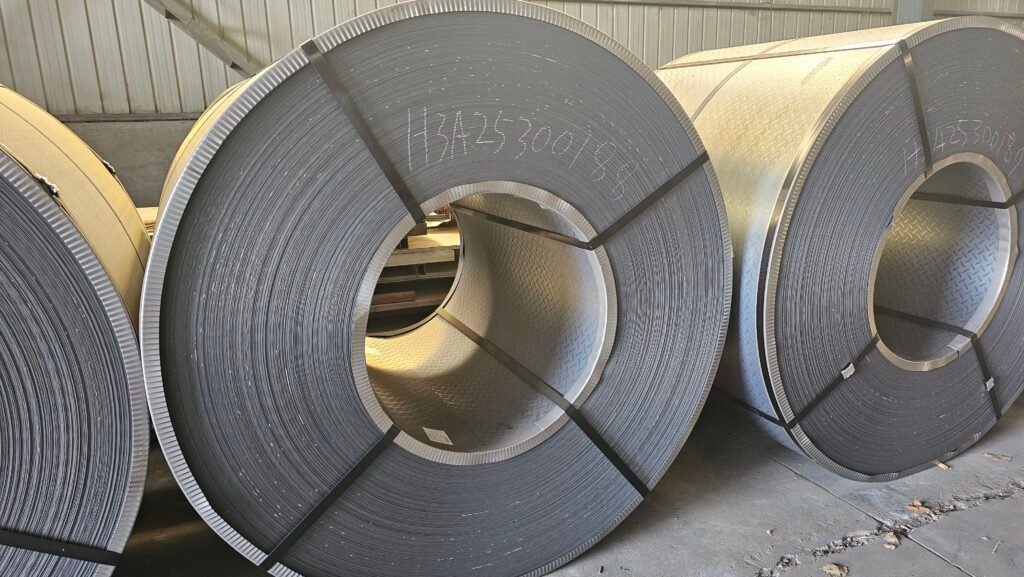
This transformation reflects a broader shift in industrial philosophy. The words of a steel industry professional capture this evolution well: “Understanding the enterprise, accumulating experience, and having emotional bonds with the company provide the source of design inspiration and the greatest advantage.” This combination of tradition and innovation, of physical expertise and digital transformation, defines the steel industry’s path forward in 2025 and beyond.
The European Commission is expected to finalize regulations limiting steel imports before the end of the current quarter, while China’s capacity replacement policy is anticipated to foster an industry structure dominated by “central state-owned enterprises + regional leaders” .
The coming decade will likely see two parallel trends in the global steel industry: Western countries maintaining domestic capacity through trade protection measures, and leading enterprises enhancing competitiveness through green innovation. Companies that can rapidly adapt to new technologies and balance environmental and economic demands will emerge stronger from this period of transformation.