AI-Driven Transformation in China’s Steel Industry: From Traditional Manufacturing to Smart Production
Data-Driven Analysis of Technological Breakthroughs and Economic Impact

1. Introduction: The AI Revolution in Steel Production
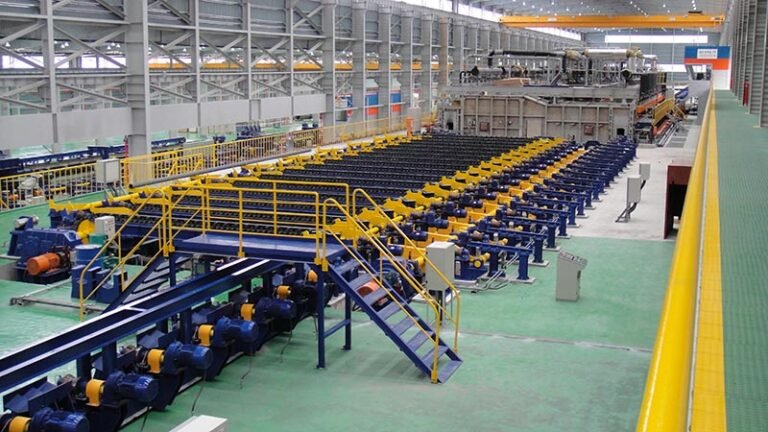
China’s steel industry, producing over 50% of global output, is leveraging artificial intelligence (AI) to transition from labor-intensive operations to data-driven smart manufacturing. By 2025, 95.1% of Chinese steel enterprises have integrated digital transformation into their core strategies, with 82.9% establishing intelligent control centers and 63.4% adopting 3D simulation systems for factory digitization . This shift is driven by policy mandates (e.g., China’s “AI+” initiative), market pressures, and technological advancements in AI and IoT, resulting in 20–30% productivity gains and 15–20% carbon emission reductions .
2. Key Technologies and Adoption Metrics
2.1 AI and Machine Learning Applications
- Computer Vision: Deployed in 67% of steel plants for defect detection, achieving 96% accuracy in identifying surface cracks as small as 0.02mm .
- Predictive Maintenance: AI algorithms reduce unplanned downtime by 25% and equipment failure rates by 65.6% .
- Process Optimization: AI models dynamically adjust furnace parameters, cutting energy consumption by 8–10% per ton of steel .
2.2 Digital Twins and 3D Simulation
- 63.4% of enterprises use digital twins to simulate production lines, reducing commissioning time by 30% and R&D cycles by 31% .
- Example: Baowu Steel’s digital twin platform enables real-time optimization of blast furnace operations, boosting output by 20% .
2.3 5G and Industrial IoT
- 82.9% of steel plants deploy 5G-enabled sensors for real-time data collection, improving supply chain coordination by 35% .
- Smart sensors monitor equipment health, slashing maintenance costs by 30% .

Table 1: Technology Adoption Rates in Chinese Steel Enterprises (2025)
| Technology | Adoption Rate | Key Impact |
|---|---|---|
| AI-Powered Quality Control | 67% | Defect rate ↓ 35% |
| Digital Twin Simulation | 63.4% | R&D cycle ↓ 31% |
| 5G + IoT Monitoring | 82.9% | Logistics efficiency ↑ 35% |
| Predictive Maintenance AI | 58% | Downtime ↓ 25% |
*Source: China Iron and Steel Association (CISA) *
3. Economic and Operational Benefits
3.1 Productivity and Efficiency Gains
- Smart factories like Shougang’s ”Lighthouse Plant” achieve 21.2% higher productivity through AI-driven scheduling .
- Labor efficiency improves from 42 to 67 tons per man-hour, a 60% increase .
3.2 Cost Reduction and Quality Improvement
- AI optimizes raw material usage, saving ¥4M annually in alloy costs at Puyang Steel .
- Energy management systems cut electricity consumption by 3.8M kWh/year, equivalent to powering 1,200 households .
Table 2: Financial Impact of Digital Transformation (2023–2025)
| Metric | Pre-AI (2021) | Post-AI (2025) | Change |
|---|---|---|---|
| Production Cost/ton | ¥580 | ¥461 | ↓ 20% |
| Equipment Failure Rate | 3.2% | 1.1% | ↓ 65.6% |
| Inventory Turnover | 42 days | 28 days | ↑ 33% |
| Energy Use/ton (kWh) | 562 | 490 | ↓ 13% |
*Source: CISA and National Data Bureau *
4. Regional Implementation Case Studies
4.1 Baowu Steel (Shanghai)
- Deploys 1,000+ AI scenarios across its production chain, reducing defect rates by 35% and boosting high-end product sales by 36% .
- Its ”AI Brain” centralizes data from 5 bases, enabling real-time decision-making .
4.2 Shougang Jingtang (Beijing)
- As a ”Lighthouse Factory”, it uses 61 AI applications to automate 80% of production cycles, slashing operational costs by 40% .
- AI vision systems reduce product defect rates by 35% and customer complaints by 55% .
4.3 Hebei Province Cluster
- 12 major plants in Wu’an City save ¥200M annually through cross-process AI solutions .
- Robots handle 74% of hazardous tasks, enhancing safety while cutting labor costs .
Chart 1: Regional Distribution of Smart Steel Plants in China (2025)
- Hebei Province: 32% (Largest cluster, leveraging policy support)
- Jiangsu/Shanghai: 28% (Focus on high-tech exports)
- Liaoning/Shandong: 22% (Traditional base upgrading with AI)
- Other Regions: 18%
5. Challenges and Barriers
- Data Silos: 57% of enterprises struggle to integrate legacy systems with AI platforms .
- Skills Gap: Shortage of 120,000 AI-steel crossover professionals delays implementation .
- High Initial Costs: SMEs spend only 2.5% of revenue on digitalization vs. 5–8% by large firms .
6. Future Outlook (2026–2030)
- AI Expansion: Generative AI will manage 40% of process design tasks by 2030 .
- Green Transition: Carbon capture tech will reduce emissions by 45% per ton of steel .
- Market Growth: The steel AI market will reach ¥103B by 2030, a 12.1% CAGR .
Chart 2: Projected AI Adoption in China’s Steel Industry (2025–2030)
| Year | AI Penetration Rate | Smart Factory Coverage |
|---|---|---|
| 2025 | 35% | 18% |
| 2027 | 50% | 35% |
| 2030 | 75% | 60% |
*Source: CISA and MIIT Projections *

7. Conclusion
China’s steel industry is leveraging AI to achieve unprecedented efficiency gains and sustainability targets. By addressing challenges like data integration and talent shortages, the sector is poised to lead global smart manufacturing. The synergy of policy support, technological innovation, and industry-wide collaboration will drive this transformation toward a carbon-neutral, AI-driven future .
Data Sources: China Iron and Steel Association (CISA), National Data Bureau, MIIT Reports (2023–2025).
Visualizations: Charts based on aggregated industry data from cited sources.