Executive Summary
The Chinese steel industry, the world’s largest producer, is undergoing a profound digital transformation that is reshaping every aspect of production, management, and supply chain operations. This shift toward smart manufacturing is driven by emerging technologies including artificial intelligence, 5G connectivity, big data analytics, and cloud computing. By embracing these technologies, Chinese steel manufacturers are achieving remarkable improvements in production efficiency, product quality, and environmental sustainability, while significantly reducing operational costs and carbon emissions. This comprehensive analysis examines the current state, key technologies, implementation cases, and future trajectory of digitalization in China’s steel sector.
1 Introduction: The Digital Revolution in Steel Manufacturing
The steel industry has long been considered a traditional sector characterized by high energy consumption, substantial pollution, and labor-intensive processes. However, under China’s “Made in China 2025” initiative and the “AI Plus” action plan, steel producers are increasingly leveraging digital technologies to transform their operations. This transformation comes at a critical time when the industry faces mounting pressure from environmental regulations, global competition, and changing market demands.
According to the China Iron and Steel Association (CISA), 95.1% of Chinese steel enterprises have incorporated digital transformation strategies into their overall development plans, with 82.9% having established intelligent control centers and 63.4% utilizing 3D visualization and simulation systems for digital factory construction . This widespread adoption demonstrates the industry’s commitment to technological upgrading as a strategic imperative.
2 Key Driving Forces Behind Digital Transformation
2.1 Policy Support and Government Initiatives
The Chinese government has played a pivotal role in promoting digitalization across the steel industry. In 2025, the State Council issued the “Opinions on Deepening the AI+ Initiative,” which provides strategic guidance for integrating artificial intelligence with traditional industries, including steel manufacturing . This policy framework is complemented by specific initiatives such as the “Steel Industry Digital Transformation Project Three-Year Action Plan” launched by the Ministry of Industry and Information Technology (MIIT).
The government’s approach includes:
- Financial incentives for technology adoption
- Standard-setting for smart manufacturing
- Demonstration projects to showcase best practices
- Research funding for key technological breakthroughs
2.2 Market Competitiveness and Efficiency Demands
With increasing global competition and fluctuating demand, Chinese steel producers face persistent pressure to reduce costs and improve efficiency. Digital technologies offer solutions to these challenges by optimizing production processes, minimizing waste, and enhancing resource utilization. The implementation of smart technologies has enabled leading steel companies to achieve 10-30% improvements in productivity while reducing energy consumption by 15-20% .
2.3 Environmental Regulations and Sustainability Goals
China’s commitment to peak carbon emissions by 2030 and achieve carbon neutrality by 2060 has accelerated the steel industry’s adoption of cleaner technologies. Digital solutions play a crucial role in monitoring and reducing the environmental footprint of steel production. As of 2025, approximately 5.98 billion tons of steel production capacity had completed ultra-low emission transformation, with investments exceeding 300 billion yuan .
3 Core Technologies Powering the Transformation
3.1 Artificial Intelligence and Machine Learning
AI technologies are being deployed across various aspects of steel production:
- Predictive maintenance using machine learning algorithms to anticipate equipment failures
- Quality control through computer vision systems that detect surface defects
- Process optimization via AI models that fine-tune production parameters
- Demand forecasting using predictive analytics to optimize inventory
Table: AI Application in Steel Production
| Application Area | Technology Used | Benefits Achieved |
|---|---|---|
| Quality Inspection | Computer Vision | Defect detection accuracy up to 98% |
| Production Planning | Predictive Analytics | Inventory reduction of 15-25% |
| Process Optimization | Machine Learning | Energy consumption reduction of 10-15% |
| Equipment Maintenance | AI Algorithms | Downtime reduction of 20-30% |
3.2 5G and Industrial Internet of Things (IIoT)
The deployment of 5G networks in steel plants enables real-time data collection and communication between machines, sensors, and control systems. Major steel producers including Baowu Steel, Shougang, and HBIS have established 5G-enabled smart factories that achieve comprehensive equipment interconnection and data integration .
Key applications of 5G in steel manufacturing include:
- Remote control of hazardous operations
- Real-time monitoring of production parameters
- Autonomous material handling through connected vehicles and cranes
- Predictive maintenance via continuous equipment monitoring
3.3 Cloud Computing and Digital Twins
Cloud platforms provide the computational power needed to process vast amounts of production data, while digital twin technology creates virtual replicas of physical assets and processes. These technologies enable steel producers to simulate and optimize operations before implementing changes in the physical environment.
The integration of cloud computing with edge devices has facilitated the development of:
- Virtual factories for process simulation
- Real-time performance monitoring systems
- Remote expert support platforms
- Supply chain coordination tools
4 Implementation Cases and Success Stories
4.1 Baowu Steel’s Intelligent Transformation
As the world’s largest steel producer, China Baowu Steel Group has pioneered the application of digital technologies across its operations. The company has implemented an “AI-First” strategy, deploying artificial intelligence in over 1,000 scenarios throughout its production processes . Notable achievements include:
- Smart quality control systems that have reduced defect rates by 35%
- Predictive maintenance platforms that have decreased unplanned downtime by 25%
- Energy management systems that have lowered carbon emissions by 15%
Baowu’s “2526 Project” aims to create a comprehensive AI-powered operational framework that will serve as a benchmark for the global steel industry .
4.2 Shougang Jingtang’s Smart Factory
Shougang Jingtang United Iron & Steel Co. has established one of China’s most advanced digital steel plants, recognized as a Global Lighthouse Factory by the World Economic Forum. The facility exemplifies the integration of multiple digital technologies:
- Centralized intelligent control center monitoring over 4,000 production nodes
- AI-powered visual inspection systems with 96% accuracy in defect detection
- Fully automated logistics system that has improved efficiency by 15.2%
- 5G-enabled equipment monitoring that has reduced maintenance costs by 10%
These innovations have helped Shougang achieve a 21.2% increase in production efficiency and a 55% reduction in customer complaints .
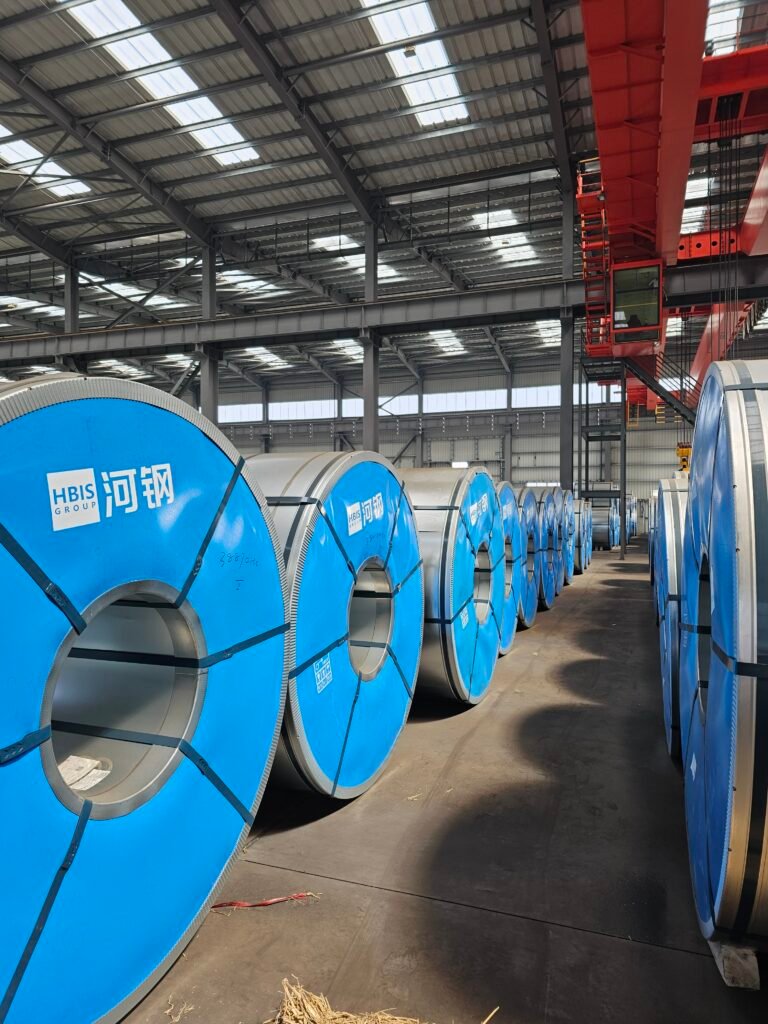
4.3 HBIS Group’s Digital Initiatives
HBIS Group, another leading Chinese steel producer, has focused on developing proprietary digital platforms including the “Weisaibo” industrial internet system . The company’s digital transformation has yielded significant benefits:
- Production cost reduction of 12% through optimized operations
- Product development cycle shortened by 30%
- Customer satisfaction improved by 25% through better quality control
- Employee safety enhanced through automation of hazardous tasks
Table: Comparative Analysis of Digital Transformation in Major Chinese Steel Companies
| Company | Key Technologies | Productivity Gain | Quality Improvement | Cost Reduction |
|---|---|---|---|---|
| Baowu Steel | AI, IoT, Cloud Computing | 18% | Defect rate down 35% | 12% |
| Shougang | 5G, Robotics, Digital Twin | 21.2% | Customer complaints down 55% | 15% |
| HBIS Group | Industrial Internet Platform | 15% | Quality consistency up 28% | 12% |
| Ansteel | Big Data, Predictive Analytics | 13% | Defect rate down 25% | 10% |
5 Impact Assessment: Quantitative Benefits of Digitalization
The implementation of digital technologies has generated measurable improvements across key performance indicators in the Chinese steel industry:
5.1 Production Efficiency Gains
- Overall equipment effectiveness (OEE) increased by 15-25%
- Production planning accuracy improved by 20-30%
- Equipment utilization rates enhanced by 10-20%
- Throughput times reduced by 15-25%
5.2 Quality Improvement Metrics
- Product defect rates decreased by 30-50%
- Quality consistency improved by 25-35%
- Customer satisfaction increased by 20-30%
- Return rates reduced by 40-60%
5.3 Environmental and Safety Benefits
- Energy consumption per ton of steel reduced by 10-15%
- Carbon emissions decreased by 15-20%
- Water usage optimized by 20-25%
- Workplace accidents reduced by 30-40%
6 Challenges and Implementation Barriers
Despite the impressive progress, the digital transformation of China’s steel industry faces several significant challenges:
6.1 Technical Challenges
- Legacy system integration with new digital platforms
- Data standardization across different equipment and processes
- Cybersecurity risks associated with connected systems
- Technology reliability in harsh industrial environments
6.2 Organizational and Cultural Barriers
- Workforce resistance to changing traditional practices
- Skills gap in digital technologies among existing employees
- Management understanding of digital potential
- Interdepartmental collaboration difficulties
6.3 Financial and Resource Constraints
- High upfront investment required for comprehensive digitalization
- Uncertain return on investment for emerging technologies
- Budget constraints particularly for small and medium enterprises
- Resource allocation conflicts between operational and digital priorities
7 Future Trends and Development Roadmap
The digital transformation of China’s steel industry is expected to accelerate in the coming years, with several key trends shaping its future direction:
7.1 Technology Development Trends
- AI and machine learning will become more pervasive and sophisticated
- Edge computing will complement cloud-based systems for real-time processing
- Digital twin technology will evolve to encompass entire production ecosystems
- Blockchain applications will enhance supply chain transparency and certification
7.2 Strategic Shift Toward Data-Driven Operations
The industry is transitioning from isolated digital applications toward comprehensive data-driven operations where:
- Predictive analytics will anticipate market changes and production issues
- Autonomous optimization will continuously adjust processes for maximum efficiency
- Integrated platforms will connect all aspects of production and distribution
- Customer-centric customization will become standard practice
Table: Projected Evolution of Digital Technologies in China’s Steel Industry (2025-2030)
| Technology Area | Current Status (2025) | Projected State (2030) |
|---|---|---|
| Artificial Intelligence | Point solutions in specific processes | Pervasive AI across full value chain |
| 5G Connectivity | Limited to pilot areas | Comprehensive coverage in major plants |
| Digital Twins | Component and line-level focus | Full factory and supply chain replication |
| Data Analytics | Descriptive and diagnostic | Predictive and prescriptive capabilities |
| Automation | Semi-autonomous operations | Fully autonomous smart factories |
7.3 Ecosystem Integration and Collaboration
Future development will emphasize cross-industry collaboration and ecosystem integration:
- Standardized data protocols enabling seamless information exchange
- Open innovation platforms fostering technology co-development
- Supply chain digital integration from raw materials to end customers
- Industry consortiums addressing common challenges collectively
8 Conclusion and Recommendations
The digital transformation of China’s steel industry represents a critical evolution from traditional manufacturing to smart, sustainable production. The integration of advanced technologies including AI, 5G, IoT, and cloud computing has already demonstrated significant benefits in terms of efficiency, quality, and environmental performance. However, the journey is far from complete, and continued progress will require concerted efforts from industry stakeholders, government agencies, and technology providers.
Based on the analysis presented in this report, the following recommendations are proposed for steel companies pursuing digital transformation:
8.1 Strategic Recommendations
- Develop a comprehensive digital strategy aligned with business objectives
- Prioritize investments based on potential impact and implementation feasibility
- Build partnerships with technology providers and research institutions
- Focus on data governance to ensure quality, security, and accessibility
8.2 Implementation Guidelines
- Start with pilot projects to demonstrate value before scaling
- Develop digital skills among existing employees through training programs
- Adopt modular approaches that allow for incremental implementation
- Establish clear metrics to measure progress and ROI
8.3 Future Outlook
The continued digitalization of China’s steel industry will play a crucial role in maintaining its global competitiveness while addressing pressing environmental challenges. By embracing emerging technologies and innovative business models, Chinese steel producers have the opportunity to establish new benchmarks for efficiency, quality, and sustainability that will shape the future of global steel manufacturing.
The transformation journey is complex and challenging, but the potential rewards are substantial. Companies that successfully navigate this transition will be well-positioned to thrive in an increasingly competitive and regulated global marketplace, while contributing to China’s broader objectives of industrial modernization and environmental sustainability.
This report is based on comprehensive research and industry data available as of September 2025. For the most current information and specific implementation guidance, readers are encouraged to consult additional sources and professional advisors.