Egypt prioritizes shielding its local industry with tariffs, while Nigeria charts an ambitious course to revive its long-dormant giant, Ajaokuta Steel. The continent is not a monolith; each nation’s strategy reveals a unique calculation of its resources and ambitions.
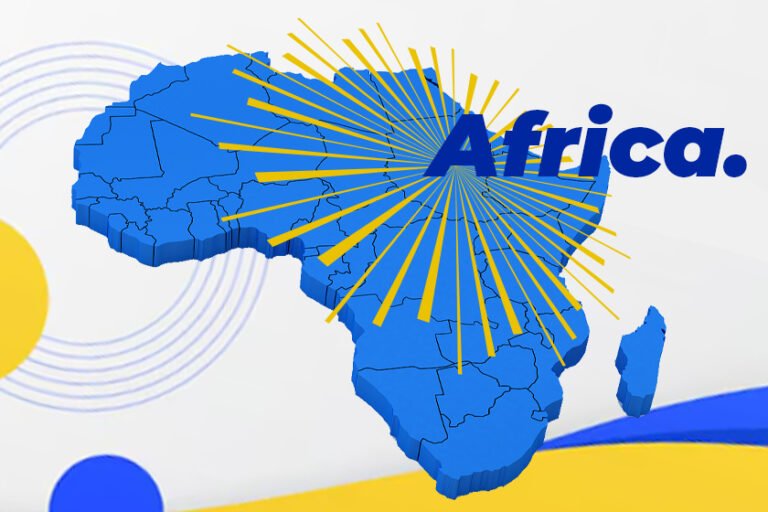
The African steel industry is no longer a mere blip on the global radar. With the continent’s steel production projected to grow from approximately 39.5 million tons in 2023 to over 51.8 million tons by 2032, a transformative journey is underway . This growth is fueled by a massive infrastructure deficit, requiring an estimated $170 billion in annual investment, which in turn drives robust local demand for steel . However, the path to development is not uniform; national policies and investment environments vary dramatically, presenting a complex mosaic of opportunities and challenges for international investors.
01 | Policy Divergence Across Key African Nations
African nations have adopted distinct approaches to developing their steel industries, shaped by their unique resources, existing industrial base, and economic goals. The differences are clear.
- Egypt: Market Protection and Industrial Upgrading As Africa’s largest steel producer with an output of 10.7 million tons in 2024, Egypt’s strategy has evolved to focus on protecting and upgrading its established industry . The country faces a paradox of overall production surplus but a reliance on imports of high-grade and specialty steels. To enhance local competitiveness, the government has supported significant new projects. Ezz Steel, for instance, has commissioned new electric arc furnace and continuous casting facilities, while Suez Steel launched an 800,000-ton heavy section mill, aiming to expand its direct reduced iron (DRI) capacity to 4.5 million tons annually . Concurrently, to shield these domestic investments, Egypt has not shied away from launching anti-dumping investigations on imported products like cold-rolled and coated steel from China and Turkey .
- Algeria: Resource-Driven Partnership Model Leveraging its abundant natural gas reserves and proximity to the Mediterranean, Algeria has taken a resource-partnership approach . With a production of 4.7 million tons in 2024, the country has actively attracted foreign partners to build a modern industrial base from the ground up. Turkish giant Tosyalı, for example, has built an integrated complex with a capacity exceeding 6 million tons, encompassing DRI, steelmaking, and rolling mills . Similarly, Qatar Steel has established a 2.5-million-ton DRI and steelmaking line. This model effectively uses Algeria’s natural gas for DRI production, creating a cost-effective and integrated supply chain focused on long steel products for construction.
- Nigeria: Ambitious Revival and Expansion Plans Nigeria presents a case of immense potential constrained by current realities. Its domestic steel demand is a staggering 17 million tons per year, yet local production is a mere 220,000 tons, creating a vast supply gap . The government’s response has been an ambitious plan to achieve 10 million tons of annual production by 2030 . This involves revitalizing the long-troubled Ajaokuta Steel Company and encouraging the growth of dozens of small-scale local and foreign-backed steel plants, such as KAM Steel and Chinese-invested companies like Hongxing Zhongyuan . The policy focus is on attracting foreign investment to bridge the colossal demand-supply gap.
- South Africa: Systematic Revitalization Amid Challenges South Africa, home to the continent’s most historically significant steel industry, is pursuing a structured revitalization effort. The government’s Steel Sector Master Plan aims to address systemic challenges, including rising energy costs and unreliable logistics, which contributed to the closure of major long-product facilities like ArcelorMittal South Africa’s Newcastle plant in 2025 . The plan focuses on improving competitiveness, stimulating local demand, and navigating policies like the Black Economic Empowerment (BEE) clauses, which mandate specific ownership structures . The country is also exploring green steel initiatives, such as green hydrogen-based DRI technology, positioning itself for a sustainable future .
Table: Major African Steel Producers Policy Snapshot (2024)
| Country | Policy Thrust | Key Measures | Production (Million Tons, 2024) |
|---|---|---|---|
| Egypt | Market Protection & Upgrading | Anti-dumping investigations, support for local capacity expansion (e.g., Ezz Steel, Suez Steel) | 10.7 |
| Algeria | Resource-Driven Partnerships | Leveraging natural gas to attract foreign investment for integrated plants (e.g., Tosyalı, Qatar Steel) | 4.7 |
| Nigeria | Ambitious Revival | 2030 production target (10M tons), revitalization of Ajaokuta Steel, encouraging small-scale plants | ~0.22 (vs. 17M tons demand) |
| South Africa | Systematic Revitalization | Steel Sector Master Plan, addressing energy/logistics costs, exploring green steel | Included in worldsteel data |
02 | Investment Environment: Where Opportunity Meets Reality
The investment landscape across Africa is equally diverse. While challenges exist, several countries stand out for their targeted efforts to attract capital and foster industrial growth.
- Egypt: A Strategic Regional Hub Egypt’s appeal lies in its large domestic market—the largest in Africa—and its strategic location for exporting to Europe and the Middle East . While its policy of market protection can be a barrier to imports, it serves as an advantage for investors willing to establish local production facilities. The presence of industrial zones, like the Suez Industrial Zone where China’s Xingxing Pipe launched a project, provides added infrastructure benefits .
- Nigeria: The High-Risk, High-Reward Frontier Nigeria’s investment case is anchored in one compelling number: a massive domestic supply gap . For investors tolerant of challenges related to infrastructure and policy uncertainty, the potential for growth is significant. The government’s strong political will to reduce import dependency translates into opportunities for those involved in local manufacturing. The success of companies like KAM Steel demonstrates that the market can support efficient, smaller-scale operations that cater to local demand .
- Ethiopia: An Emerging East African Prospect Although not a traditional steel producer, Ethiopia is actively cultivating its industrial base through favorable policies and tax incentives to attract foreign investment . With over 16 steel companies already established, including early investments by Chinese entrepreneurs, the country is building a foundation for its steel industry . Its focus on regional integration and infrastructure development, coupled with a growing population, makes it an attractive market for forward-looking investors seeking early-mover advantages in East Africa.
03 | The Green Steel and Regional Integration Factor
Two emerging trends are beginning to reshape the African steel landscape: the push for sustainability and the forces of regional integration.
- The Dawn of Green Steel Several African nations are leveraging their renewable energy potential to position themselves in the emerging green steel market. Namibia is developing a pioneering solar-powered DRI facility, a project that combines international technology, capital, and local resources . Mauritania is also positioning itself as a future green steel hub, with a goal to capture 1% of the global market by 2050, leveraging its iron ore resources and potential for green hydrogen production . Kenya is seeing steel mills integrate solar power to reduce costs and emissions, signaling a broader shift towards sustainable production .
- The Impact of Regional Integration The African Continental Free Trade Area (AfCFTA) holds the long-term promise of creating a unified continental market . This could simplify the cross-border trade of raw materials and finished steel products, enabling larger-scale, more efficient production operations that serve multiple countries. Furthermore, the “Steel for Infrastructure” model, where Chinese EPC projects prioritize procuring steel from Chinese-invested local mills, is already creating synergies between investment and development needs .
04 | Navigating Risks and Forging Partnerships
Investing in African steel is not without significant challenges. A successful strategy requires careful navigation of persistent risks and a commitment to genuine partnership.
- Universal Investment Considerations
- Infrastructure Gaps: Unreliable power supply and underdeveloped transport networks remain major hurdles, increasing operational costs .
- Policy Volatility: Investors must be prepared for potential changes in trade policies, local content rules, and tax regimes.
- Skilled Workforce Shortage: A lack of local technical expertise can be a constraint, necessitating investment in training and knowledge transfer .
- The Partnership Imperative The most successful ventures in Africa often transcend pure investment, evolving into collaborative partnerships. This involves transferring technology, developing local talent, and ensuring that projects align with the host country’s long-term industrial goals. The model of combining Chinese technology and capital with localized African operations, as seen in the new Kenyan steel plant, offers a sustainable path forward, creating jobs and meeting “Made in Africa” policy objectives .
The variation in African steel policies underscores a continent actively shaping its industrial destiny. From Egypt’s protective modernization to Nigeria’s ambitious expansion and the nascent green steel initiatives in Namibia and Mauritania, each strategy offers a distinct value proposition. For global investors, success will depend on a nuanced understanding of these national differences, a long-term perspective that looks beyond short-term volatility, and a commitment to partnerships that foster mutual growth . The African steel story is still being written, and the most insightful partners will have a hand in shaping its next chapter.