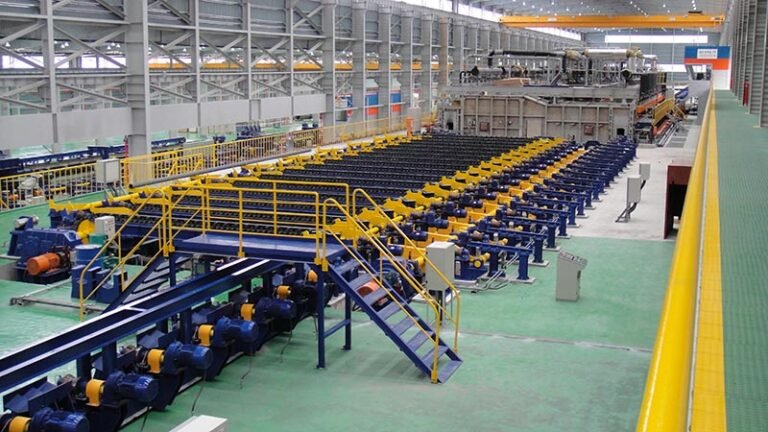
The road to net-zero steel is as much about technology as it is about economics, collaboration, and reimagining a centuries-old industry.
The global steel industry stands at a critical juncture. Accounting for approximately 7-8% of global CO₂ emissions, this foundational sector faces unprecedented pressure to transform its production methods while meeting steady demand from developing economies and navigating increasingly complex trade landscapes. The path forward—filled with technological innovation, regional divergence, and systemic collaboration—will redefine how this essential material is produced and consumed worldwide.
1. The Decarbonization Imperative: More Than Just Environmental Compliance
Climate change has emerged as what World Steel Association’s Edwin Basson terms a “super trend”—a meta-force that influences all other industry trends. The numbers reveal the scale of the challenge: without intervention, steel industry emissions could rise from 3.6 billion tons to 4 billion tons by 2050. With aggressive carbon reduction efforts, the industry could achieve 20-40% reduction in emissions.
The regulatory environment is tightening globally. The EU’s Carbon Border Adjustment Mechanism (CBAM), set for full implementation in 2026, may increase costs for steel exporters to key markets. Simultaneously, downstream customers—particularly in automotive and consumer goods—are increasingly demanding verifiably low-carbon steel for their supply chains.
Despite these pressures, global carbon intensity has remained stubbornly high. Over the past five years, tonne steel emissions have hovered around 1.92 tonnes of CO₂, showing little improvement despite various efficiency measures. This stagnation highlights that incremental improvements are insufficient; fundamental technological transformation is required for meaningful progress.
2. Emerging Technological Pathways: A “Three-Route” Future
The industry is moving beyond traditional blast furnace technology toward a diversified future. As Basson outlines, three distinct technological pathways are emerging, each with different regional applications based on resource availability:
Table: Comparison of Primary Low-Carbon Steel Production Routes
| Technology Route | Key Characteristics | Regional Suitability | Current Challenges |
|---|---|---|---|
| Scrap-EAF (Electric Arc Furnace) | Lower capital cost, flexibility in operation | Regions with abundant scrap resources | Scrap quality variability, electricity costs |
| Natural gas/Hydrogen-DRI-EAF | Medium-term transition fuel to hydrogen | Areas with access to low-cost gas/hydrogen | Green hydrogen cost, infrastructure needs |
| Green BF-BOF (Blast Furnace) | Carbon capture retrofits to existing plants | Established steel hubs with modern facilities | CCUS costs, efficiency penalties |
Despite emerging alternatives, blast furnaces will remain central to global steel production, projected to account for approximately 50% of output as late as 2050. This continuity presents a significant decarbonization challenge, given these assets’ long operational lifespans and the substantial investments required to retrofit them with carbon capture technologies.
China is witnessing particular growth in EAF capacity, with Basson noting that “China’s scrap resources present significant growth possibilities for seeing carbon reduction benefits from technological advances”. This shift represents a fundamental rethinking of production methods in the world’s largest steel-producing nation.
3. Regional Divergence: Contrasting Transformation Speeds
The global steel landscape reveals strikingly different regional trajectories, influenced by economic development stages, resource endowments, and policy environments:
3.1 China: Balancing Scale with Sustainability
As the dominant producer of 54.5% of global crude steel (6.7 billion tons out of 12.3 billion in January-August 2025), China’s transformation pathway disproportionately influences global progress. The country faces the dual challenge of addressing supply-demand imbalance while pursuing quality-over-quantity growth.
The Chinese government’s “Steady Growth Work Plan (2025-2026)” emphasizes supply-side reform, aiming for annual growth of approximately 4% in industry value-added while pushing for greener, more digitalized development. Profitability challenges persist—the sector’s average sales profit rate stands at a precarious 1.97%, ranking among the lowest in China’s industrial sector.
3.2 Emerging Markets: Growth Frontiers with Different Challenges
India and Southeast Asian nations are becoming increasingly important demand drivers, with ASEAN steel consumption reaching 81.2 million tonnes in 2024 (an 8% year-on-year increase). Africa is expected to emerge as a new growth frontier in coming decades.
Paradoxically, much of the new capacity in these regions utilizes carbon-intensive production methods, potentially locking in high emissions for decades. As the World Steel Association’s Zhong Shaoliang notes, this trend “increases the difficulty of reducing carbon emission intensity”.
3.3 Mature Economies: Focus on Modernization
Developed markets face different challenges—aging populations, saturated steel consumption, and the need to modernize existing infrastructure rather than build anew. These regions are pioneering hydrogen-based steelmaking and circular economy approaches, though they face competitive pressures from imports.
Japan’s experience is instructive: after peaking at 90 million tonnes, the country’s steel demand has declined to approximately 50 million tonnes, prompting producers to focus on high-value product specialization and capacity rationalization rather than volume competition.
4. The Green Steel Market: From Niche to Mainstream
The market for verifiably low-carbon steel is transitioning from specialty product to competitive necessity. Currently characterized by price premiums and specialized applications, green steel is increasingly demanded by downstream industries conscious of their environmental footprints.
Several factors are accelerating this transition:
- Corporate sustainability commitments: Major automakers, appliance manufacturers, and construction companies are making ambitious carbon reduction pledges that extend to their supply chains
- Regulatory pressure: Policies like CBAM create financial incentives for low-carbon production methods
- Investor expectations: Financial institutions are increasingly applying climate criteria to investment decisions and lending practices
- Consumer awareness: End consumers show growing preference for products with verified sustainability credentials
The cost differential remains significant. International Energy Agency data indicates that hydrogen-based direct reduced iron costs 50-85% more than conventional blast furnace production. However, experts predict China’s renewable energy capacity could make its hydrogen-based direct reduction iron cost-competitive globally by 2030.
5. Policy Frameworks: Building Supportive Ecosystems
Effective policy is critical to navigating the low-carbon transition. As analyses suggest, a coordinated “technology-policy-market-element-standard” approach is needed to build a deep decarbonization system. Key policy mechanisms include:
Carbon pricing mechanisms that create financial incentives for emission reductions. China’s national carbon market now includes the steel sector, though mechanisms for allocation, pricing, and market activity continue to evolve.
Differentiated policies that recognize the distinct challenges facing different production routes. Long-process producers may face strict capacity controls and CCUS application requirements, while short-process producers could receive green electricity support.
International standards alignment to facilitate recognition of low-carbon steel across jurisdictions. Without mutual recognition, green steel markets may remain fragmented, limiting scale economies.
Government support varies significantly globally. By early 2025, $180 billion in government funding had been announced globally for relevant projects, though China’s direct financial support remained limited. This disparity raises competitiveness concerns during the transition period.
6. Innovation Frontiers: Technological Breakthroughs in Progress
Beyond incremental improvements, several transformative technologies are advancing:
Hydrogen metallurgy represents perhaps the most promising breakthrough. Ansteel’s 10,000-tonne green electricity-hydrogen fluidized bed hydrogen metallurgy pilot line—the first of its kind globally—has produced direct reduced iron with 95%+ metallization rate suitable for automotive and electrical steel applications. The technology achieves near-zero carbon emissions per tonne of iron, a radical departure from the approximately 2 tonnes of CO₂ associated with conventional blast furnace production.
Digitalization and AI are enabling efficiency gains that reduce both costs and emissions. Tata Steel has developed over 600 AI models, most based on physical and chemical principles combined with generative AI and data science optimization. Global “Lighthouse Factories” demonstrate how digital technologies can drive sustainability—of 189 global Lighthouse Factories, 79 are in China, including 3 in the steel sector.
Carbon Capture, Utilization and Storage (CCUS) technologies, while still facing significant cost and infrastructure hurdles, may provide a pathway for existing assets, particularly in regions where alternative pathways are less feasible.
7. The Road Ahead: Barriers and Opportunities
The transformation timeline is compressed relative to the industry’s typical investment cycles. While 2050 net-zero commitments may seem distant, the decisions made in the current decade will largely determine achievability. Several interconnected challenges stand out:
Financial constraints are particularly acute during industry downturns. As China Steel Association’s Jiang Wei notes, “In the industry down cycle, low-carbon technology R&D may create huge cash flow pressure on steel enterprises”. With the industry’s profit margin ranking among the lowest in China’s industrial sector, investment capacity is constrained.
Technical bottlenecks persist across promising pathways. Hydrogen metallurgy remains at the pilot stage, EAF development is limited by scrap resources and green electricity costs, and CCUS faces storage and transportation challenges.
Geopolitical complications are intensifying. The World Steel Association has observed that “factors affecting steel industry decarbonization have extended beyond technology,” citing electoral politics creating climate strategy uncertainty in some countries.
Despite these challenges, the transition presents significant opportunities. The emerging green steel market could reward first movers with premium pricing and preferred access to sustainability-conscious customers. Producers that successfully decouple carbon emissions from production can potentially achieve both regulatory compliance and competitive advantage.
Conclusion: Toward a Flexible, Collaborative Future
The global steel industry’s transformation is unprecedented in scale and complexity. No single technology, policy, or business model will suffice; instead, a coordinated “technology-policy-market-element-standard” approach is essential. Success will require unprecedented collaboration across value chains—from mining companies like Vale and BHP exploring low-carbon iron production to steelmakers and end users co-developing solutions.
The most successful players will be those that embrace flexibility—developing the capability to leverage multiple production routes adapted to local conditions, and maintaining strategic agility in a rapidly evolving policy and competitive landscape. They will transition from volume-based competition to value creation, leveraging digitalization, circular economy principles, and deep customer partnerships.
As the World Steel Association’s Edwin Basson concludes, steel producers must evolve into “material solution providers, smart manufacturers, and carbon-neutral ecosystem builders” to succeed in this new era. The companies that thrive will be those that recognize that sustainable steel is not just an environmental imperative but the foundation of long-term competitiveness in a carbon-constrained world.
The coming decade will determine whether this foundational industry can transform itself while continuing to provide the essential materials for economic development worldwide. The challenge is monumental, but so too is the opportunity to reinvent one of humanity’s most essential industries for a sustainable future.